
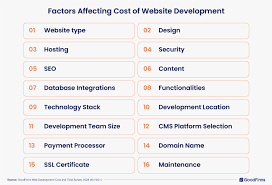
The Cost of Web Development: Factors to Consider
Web development costs can vary significantly depending on various factors. Understanding these factors is crucial for businesses looking to invest in a new website or revamp an existing one.
Complexity of the Website
The complexity of the website plays a significant role in determining the cost of development. A simple informational website will cost less than a complex e-commerce platform with advanced features such as payment gateways, user accounts, and inventory management.
Design Requirements
The design of the website also impacts the cost. Custom designs tailored to your brand will cost more than using pre-made templates. Factors such as responsiveness, user experience, and visual appeal all contribute to the final cost.
Functionality and Features
The more functionality and features you require, the higher the development costs will be. Integrating third-party services, creating custom plugins, or implementing advanced functionality all add to the overall cost.
Maintenance and Support
Maintenance and support are ongoing costs that should be factored into your budget. Regular updates, security patches, and technical support ensure your website remains secure and up-to-date.
Developer Expertise
The expertise and experience of the web development team also influence costs. Highly skilled developers may charge higher rates but can deliver a superior product in less time.
Hosting and Domain Costs
Hosting and domain costs are recurring expenses that need to be considered. Choosing reliable hosting services and securing a domain name are essential for maintaining an online presence.
In conclusion, web development costs can vary depending on a range of factors including complexity, design requirements, functionality, maintenance, developer expertise, and ongoing hosting expenses. By understanding these factors and planning accordingly, businesses can make informed decisions when investing in their online presence.
Five Essential Tips to Minimise Web Development Costs
- Plan ahead to avoid unexpected costs during the development process.
- Consider using open-source technologies to reduce licensing fees.
- Optimize your website for performance to save on hosting costs in the long run.
- Hire experienced developers to ensure efficient and quality work, which can save money in the long term.
- Regularly maintain and update your website to prevent costly issues or security breaches in the future.
Plan ahead to avoid unexpected costs during the development process.
Planning ahead is crucial when it comes to managing web development costs effectively. By carefully mapping out the project requirements, setting clear objectives, and establishing a detailed budget early on, businesses can mitigate the risk of unexpected expenses cropping up during the development process. This proactive approach not only helps in staying within budget constraints but also ensures a smoother and more efficient execution of the project, ultimately leading to a successful and cost-effective web development endeavour.
Consider using open-source technologies to reduce licensing fees.
When considering the cost of web development, it is advisable to explore the option of utilising open-source technologies as a means to mitigate licensing fees. Open-source platforms and tools provide a cost-effective alternative to proprietary software, offering flexibility, community support, and a wealth of resources without the burden of expensive licensing agreements. By embracing open-source technologies, businesses can significantly reduce their upfront costs while still benefiting from robust and reliable solutions for their web development projects.
Optimize your website for performance to save on hosting costs in the long run.
Optimizing your website for performance is a smart strategy to save on hosting costs in the long run. By ensuring that your website loads quickly and efficiently, you can reduce the amount of server resources required to serve your web pages. This not only improves user experience but also lowers your hosting expenses by potentially allowing you to operate on a lower-tier hosting plan. Implementing best practices such as image optimization, minifying code, and leveraging caching mechanisms can go a long way in improving your website’s performance and ultimately cutting down on ongoing hosting costs.
Hire experienced developers to ensure efficient and quality work, which can save money in the long term.
Hiring experienced developers for your web development project is a wise investment that can lead to more efficient and high-quality work. Experienced developers bring a wealth of knowledge and expertise to the table, enabling them to tackle challenges effectively and deliver results that meet or exceed expectations. By prioritising quality from the outset, businesses can avoid costly rework or fixes down the line, ultimately saving money in the long term.
Regularly maintain and update your website to prevent costly issues or security breaches in the future.
Regularly maintaining and updating your website is a crucial aspect of managing web development costs effectively. By staying proactive and ensuring that your website is up-to-date with the latest security patches, software updates, and content revisions, you can prevent costly issues and security breaches in the future. Investing in regular maintenance not only enhances the performance and user experience of your site but also safeguards it against potential threats, ultimately saving you time, money, and potential reputational damage in the long run.
Leave a Reply