
Outsource Website Development: A Practical Guide for Businesses
A well-designed website can help a business attract customers, build trust and support growth. But developing one takes time and a mix of skills, from design and front-end development to security and testing. For businesses without those capabilities in-house, outsourcing website development can be an effective way to access the expertise needed to deliver a successful project.
Outsourcing means working with an external freelancer, agency or development team to plan, build and maintain a website. The right arrangement can give you flexibility and specialist knowledge without the commitment of hiring a full in-house team. To get the most from it, you need to choose a suitable partner and establish a clear working relationship from the outset.
Why outsource website development?
Access specialist expertise
Website projects often require several areas of expertise, including user experience, visual design, coding, content management systems, accessibility and search engine optimisation. An external team may bring these skills together, helping you avoid relying on one person to manage every part of the project.
Keep your team focused
Developing a website internally can take staff away from their usual responsibilities. Outsourcing can allow your team to concentrate on day-to-day operations while the development partner manages the technical work. Your input is still important, particularly when setting priorities and reviewing progress, but you do not have to oversee every task.
Scale support to suit your project
Some businesses need a small website with a few key pages; others need a complex platform with integrations and custom features. An outsourced team can often be engaged for a particular project or level of ongoing support, making it easier to match resources to your requirements.
Bring a fresh perspective
An external partner can offer an independent view of your website and the experience it provides. This may help identify unclear navigation, outdated content or opportunities to make it easier for visitors to take action.
When is outsourcing the right choice?
Outsourcing may be a good option if your business lacks the technical skills needed for a new website, has a fixed launch date or wants to improve an existing site without expanding its permanent team. It can also suit businesses that need specialist support for a particular task, such as a redesign, e-commerce build or connection to another business system.
However, outsourcing is not a substitute for clear decisions. Your business will still need to provide direction, approve content and design, and make sure the finished website reflects its goals and priorities.
How to outsource website development successfully
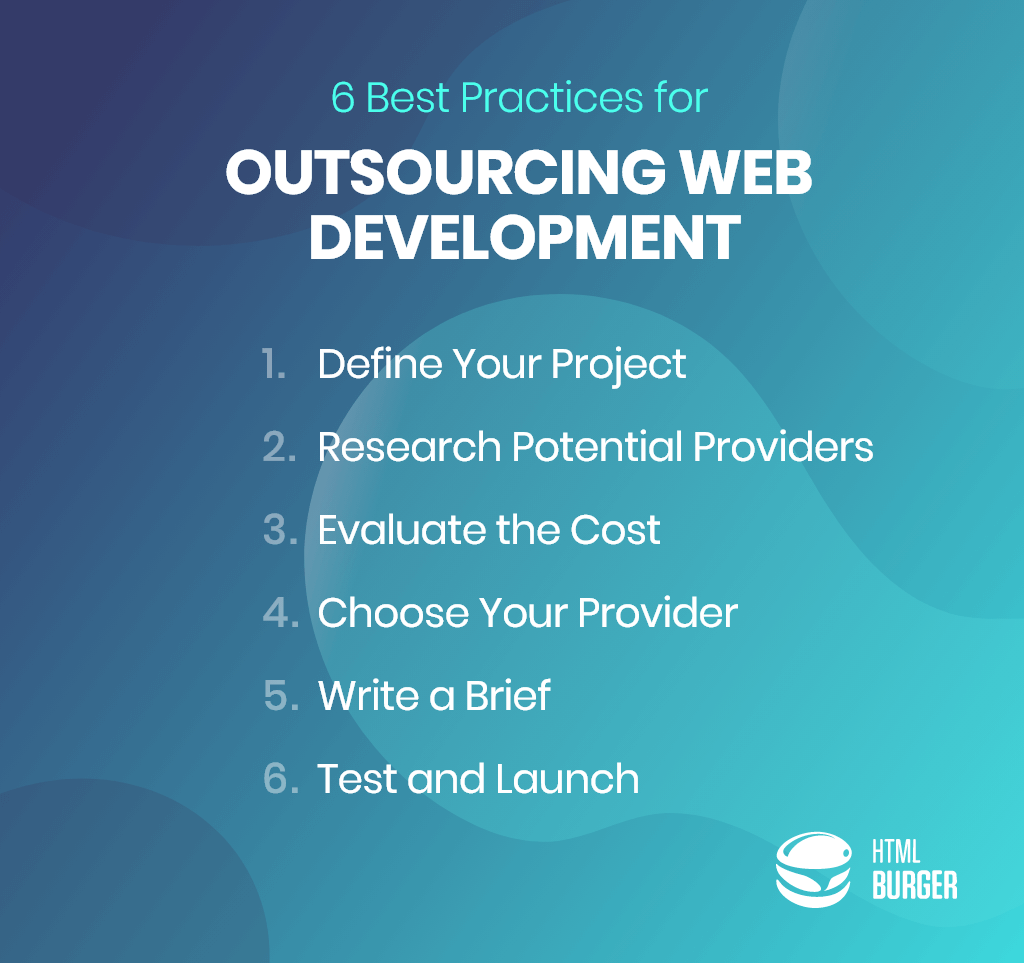
Define your goals
Start by describing what the website needs to achieve. Your goals might include generating enquiries, selling products, explaining a service or helping existing customers find information. Clear objectives make it easier to decide what features are essential and how success will be measured.
Set the scope and budget
List the required pages, features, integrations and content. Separate essential requirements from additions that could be considered later. Agreeing a realistic budget and scope helps potential partners provide useful proposals and reduces the risk of unexpected costs.
Choose the right partner
Review relevant examples of previous work and ask how the partner approaches planning, design, development and testing. Look for clear communication, appropriate technical experience and a process that suits your organisation. References or case studies can help you understand how the team works with clients.
Agree how you will work together
Before work begins, clarify responsibilities, milestones, review stages and communication channels. Confirm who will provide content, who approves decisions and how changes to the agreed scope will be handled. A written agreement should also cover costs, timescales, intellectual property, confidentiality and ongoing support.
Stay involved throughout the project
Regular check-ins and timely feedback help keep a project on track. Review designs and working versions of the website against the original goals, rather than waiting until launch to raise important questions. Make sure the people who will use or manage the website have a chance to contribute.
Plan for testing and maintenance
Before launch, the website should be tested across common devices and browsers. Forms, links, payments and integrations should work as expected, while accessibility, performance and security should also be considered. After launch, agree who will manage updates, backups, bug fixes and technical support.
Common outsourcing challenges
Outsourcing can bring valuable expertise, but it also involves working across organisational boundaries. Delays may occur if decisions or content are not supplied on time. Misunderstandings can arise when requirements are vague, and costs can increase if new features are added without reviewing their effect on the schedule and budget.
These challenges are easier to manage with a detailed brief, agreed points of contact and a transparent process for handling changes. It is also important to confirm that your business will have access to the website, its content and relevant account credentials once the work is complete.
What should you look for in a development partner?
- Experience with projects similar in scale or purpose to yours
- A clear explanation of the proposed process and deliverables
- Strong communication and realistic expectations
- Knowledge of accessibility, security and website performance
- Training or documentation for the people managing the site
- Transparent pricing and a clear approach to ongoing support
Make outsourcing work for your business
Outsourcing website development can give your business access to the skills and capacity needed to build a website without creating a permanent in-house team. The strongest results come from treating the relationship as a partnership: set clear goals, choose a team with relevant experience and stay involved at key stages.
With careful planning and open communication, an outsourced website project can deliver more than a new online presence. It can create a practical, reliable tool that supports your customers and helps your business move forwards.
Essential FAQs on Outsourcing Website Development: Costs, Selection, Timelines, and More
- What does it mean to outsource website development?
- How much does it cost to outsource website development?
- How do I choose the right website development agency or freelancer?
- What should I include in a website development brief?
- How long does an outsourced website development project take?
- How can I protect my website, data and intellectual property when outsourcing development?
- What ongoing support and maintenance should I arrange after my website launches?
What does it mean to outsource website development?
Outsourcing website development means hiring an external freelancer, agency or development team to plan, design, build or maintain your website, rather than doing all the work in-house. You can outsource the whole project or specific tasks, such as coding, e-commerce setup or ongoing support, depending on your needs and the skills available within your business.
How much does it cost to outsource website development?
The cost of outsourcing website development depends on the project’s size, complexity and required features, as well as the experience and location of the development team. A simple brochure website will usually cost less than a bespoke platform or e-commerce site with custom integrations. Ask for a detailed proposal that sets out what’s included, the project timeline, any potential extra charges and ongoing costs such as hosting, maintenance and support.
How do I choose the right website development agency or freelancer?
Choose a website development agency or freelancer with experience relevant to your project, and review examples of their work, client testimonials and references. Ask how they manage planning, communication, testing and support after launch, and make sure they understand your goals, budget and timescale. Compare proposals carefully, checking what’s included, who owns the finished website and how extra work is priced. The right partner should communicate clearly, set realistic expectations and make you feel confident about working together.
What should I include in a website development brief?
A good website development brief should explain your business, target audience and the main goals of the website, such as generating enquiries or selling products. Include the pages and features you need, any content or branding guidelines, examples of websites you like, and technical requirements such as integrations, hosting or a content management system. It’s also useful to set out your budget, preferred timescale, key decision-makers and expectations for accessibility, maintenance and ongoing support. The clearer your brief, the easier it is for a development partner to recommend the right approach and provide an accurate proposal.
How long does an outsourced website development project take?
The timeframe for an outsourced website development project depends on its size, complexity and how quickly content and feedback are provided. A straightforward website may take around 4–8 weeks, while a larger site with bespoke features, e-commerce or third-party integrations can take several months. The process typically includes planning, design, development, testing and launch, so agreeing the scope and milestones with your development partner early on can help set realistic expectations.
How can I protect my website, data and intellectual property when outsourcing development?
Protect your website, data and intellectual property by agreeing clear terms before development begins. Use a contract that defines who owns the code, designs and other deliverables, and when ownership transfers; consider a confidentiality agreement and, where personal data is involved, a data processing agreement that meets UK GDPR requirements. Limit access to the systems and information the development team needs, use secure accounts and authentication, and keep control of domains, hosting and code repositories wherever possible. Ask for regular backups and security updates, and ensure all access is removed when the work ends. For important projects, seek legal and security advice tailored to your circumstances.
What ongoing support and maintenance should I arrange after my website launches?
After launch, arrange regular software, plugin and security updates, automated backups, uptime and performance monitoring, and prompt fixes for bugs or compatibility issues. Depending on your site, you may also need support with content updates, SEO, analytics and integrations. Agree who is responsible for each task, how quickly urgent issues will be handled, what is included in the maintenance fee and how you can access your website, hosting and backup files.
Leave a Reply