
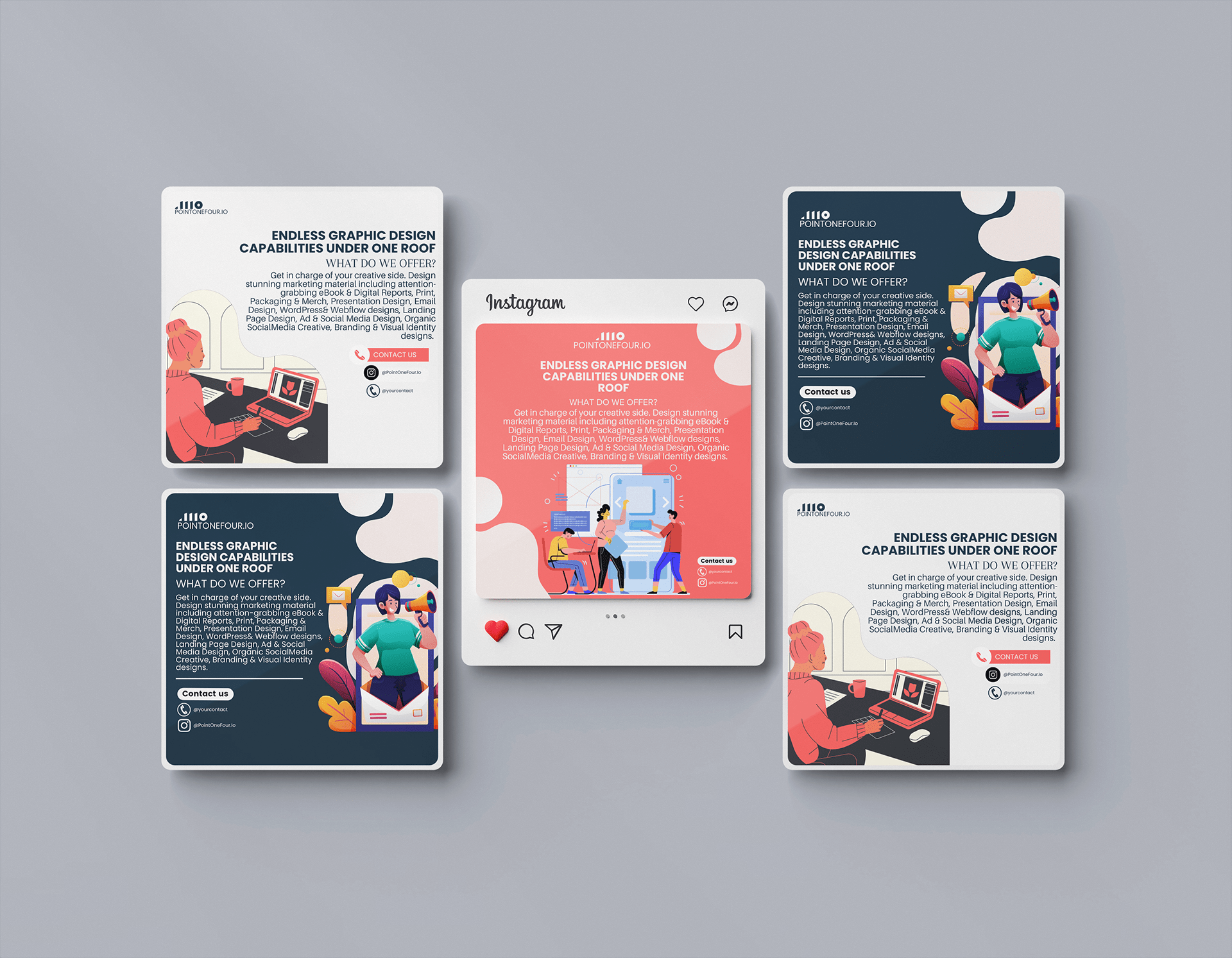
Graphic Design for Social Media Marketing
On social media, people often decide in seconds whether to stop scrolling, take a closer look or move on. Strong graphic design helps a brand earn that attention. It makes content easier to recognise, understand and remember — and gives audiences a reason to engage.
But effective social media design is about more than making a post look attractive. It brings together visual identity, clear communication and the needs of each platform to help marketing content work harder.
Why graphic design matters on social media
Social platforms are busy, fast-moving environments. A consistent visual style can help your content stand out and make your brand instantly recognisable. When colours, typography, imagery and layouts work together, each post contributes to a stronger overall identity.
Good design also makes information easier to absorb. A well-structured graphic can explain an idea, highlight an offer or guide someone towards a next step without overwhelming them. This is particularly useful for audiences viewing content on a small screen or while scrolling quickly.
Build a recognisable visual identity
Consistency doesn’t mean every post has to look the same. It means using a clear set of visual principles so your content feels connected. These might include:
- A defined colour palette and a considered approach to contrast
- Typography that is legible on mobile devices
- A consistent style for photography, illustration or iconography
- Templates for recurring formats, such as announcements or tips
- Clear, considered use of your logo and other brand elements
These guidelines help create familiarity while leaving room for variety. A campaign can have its own character and still feel unmistakably part of your brand.
Design for the platform and the audience
Each social platform has its own formats, conventions and user expectations. A design created for a square Instagram post may not translate well to a vertical video cover or a LinkedIn carousel. Consider the platform’s dimensions, how content appears in the feed and whether key details might be cropped or obscured by interface elements.
It’s equally important to understand the people you’re trying to reach. Their interests, needs and level of familiarity with your subject should shape the tone and complexity of your visuals. A useful design starts with the audience, not just the format.
Make the message clear
Every graphic should have a purpose. Before designing, decide what the audience needs to understand or do. Is the post introducing a product, sharing useful advice, promoting an event or inviting people to visit a website?
Keep the main message prominent and avoid squeezing too much information into one image. Use hierarchy to lead the eye: a clear headline, supporting details and a visible call to action. If the subject needs more explanation, a carousel, caption or linked page may be more effective than a crowded graphic.
Prioritise accessibility
Accessible design helps more people engage with your content. Use readable type sizes, strong colour contrast and straightforward layouts. Don’t rely on colour alone to communicate important information, and avoid placing text over busy images unless it remains easy to read.
Add alternative text where the platform allows it, and include captions for video content. Keeping language clear and avoiding unnecessary visual clutter can also make posts easier to understand.
Create content efficiently without losing quality
Planning and reusable templates can make social media production more manageable. Templates are useful for repeatable content, but they should be flexible enough to accommodate different messages and imagery. Review them regularly to make sure they still reflect your brand and work well across current platform formats.
A simple content plan can help balance promotional posts with educational, entertaining or community-focused content. This gives your feed variety while keeping the visual identity coherent.
Test, learn and refine
Design decisions should be informed by how people respond. Review performance data such as reach, saves, shares, comments and click-throughs, depending on the purpose of each post. These measures can reveal whether your content is attracting attention, providing value or encouraging action.
Use those insights to test different approaches: a shorter headline, a new image style, a carousel instead of a single graphic, or a more prominent call to action. Small, thoughtful adjustments can help improve future content.
Design that works beyond the scroll
Graphic design is a practical part of social media marketing. It helps brands communicate clearly, build recognition and create content that feels relevant to its audience. When design is guided by a strong visual identity, platform awareness and a clear message, social posts can do more than look good — they can support meaningful connections between a brand and the people it wants to reach.
6 Graphic Design Tips for Standout Social Media Marketing
- Keep colours and fonts consistent with your brand.
- Use clear visual hierarchy to guide the eye.
- Design for each platform’s dimensions and format.
- Choose high-contrast colours for easy reading.
- Use sharp, high-quality images.
- Make calls to action clear and easy to spot.
Keep colours and fonts consistent with your brand.
Use colours and fonts consistently across your social media content to make your brand easier to recognise. Choose a palette and typefaces that reflect your brand’s personality, then apply them across posts, stories and campaigns. This creates a cohesive look, builds familiarity with your audience and helps every piece of content feel part of the same brand.
Use clear visual hierarchy to guide the eye.
Use clear visual hierarchy to guide the eye through your social media design. Make the most important message stand out with size, colour, contrast or placement, then use headings and supporting details to lead viewers naturally towards the next step. A well-ordered layout is easier to scan on a small screen and helps your audience understand what matters at a glance.
Design for each platform’s dimensions and format.
Design each post for the platform it will appear on, rather than simply resizing the same graphic everywhere. Image dimensions, aspect ratios and formats vary across social channels, and content may be cropped or displayed differently in feeds, stories and video covers. Check the latest specifications for each placement, keep important text and visuals within safe areas, and preview your designs on mobile to make sure they remain clear and easy to view.
Choose high-contrast colours for easy reading.
Choose high-contrast colours to make social media content easier to read, especially on small screens or in bright light. Pairing dark text with a light background, or vice versa, helps key messages stand out and makes them more accessible to people with visual impairments. Check that text remains clear against images and coloured backgrounds, and avoid relying on colour alone to communicate important information.
Use sharp, high-quality images.
Use sharp, high-quality images to make your social media content feel polished and professional. Clear visuals help your products, people and ideas stand out in busy feeds, while blurry or poorly lit images can distract from your message and weaken trust in your brand. Choose images that suit your visual identity, check that they display well on mobile screens, and use the correct size and resolution for each platform.
Make calls to action clear and easy to spot.
Make your call to action clear, concise and easy to spot. Use direct wording such as “Shop now”, “Read more” or “Sign up”, and give it enough visual prominence through placement, contrast and whitespace. A well-designed call to action helps people understand what to do next without competing with the rest of your message.
Leave a Reply