
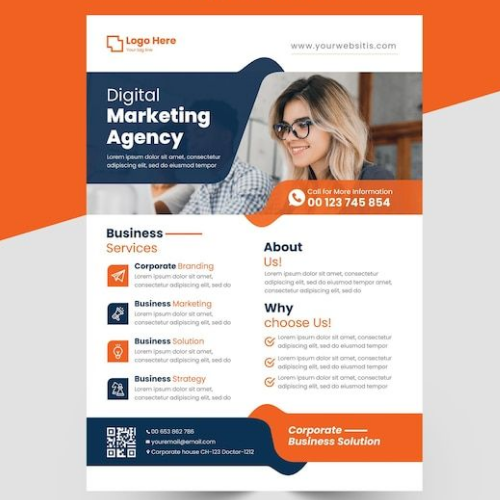
The Power of Web Design Flyers
In today’s digital age, where online presence is crucial for businesses, the role of web design flyers may seem outdated. However, these traditional marketing tools still hold significant power in capturing attention and driving traffic to your website.
Web design flyers serve as a tangible reminder of your online presence. They can be distributed at events, posted in public spaces, or included in direct mail campaigns. By incorporating elements of your website’s design into the flyer, you create a seamless brand experience for your audience.
One of the key advantages of web design flyers is their ability to reach a wider audience beyond the confines of the internet. They can attract potential customers who may not have come across your website otherwise, making them a valuable tool for expanding your reach.
When designing a web design flyer, it’s essential to ensure consistency with your online branding. Use the same colour scheme, fonts, and imagery to reinforce brand recognition. Incorporate QR codes or custom URLs that lead directly to relevant pages on your website for a seamless user experience.
Don’t underestimate the impact of a well-designed web design flyer. It can be a cost-effective way to drive traffic to your website, increase brand awareness, and generate leads. By combining the best practices of traditional marketing with modern web design principles, you can create a powerful tool that complements your online strategy.
Maximising Impact: 9 Benefits of Web Design Flyers for Your Business
- Cost-effective marketing tool
- Tangible reminder of online presence
- Captures attention in physical spaces
- Expands reach beyond online audience
- Drives traffic to website
- Increases brand awareness
- Generates leads through direct engagement
- Reinforces brand recognition and consistency
- Combines traditional marketing with modern design principles
Challenges of Web Design Flyers: Key Drawbacks to Consider
- Limited space for content
- May get lost or discarded easily
- Printing costs can be high
- Difficult to track effectiveness compared to online ads
- Design may not translate well from digital to print format
- Potential environmental impact due to paper usage
- Requires distribution effort and cost
Cost-effective marketing tool
Web design flyers serve as a cost-effective marketing tool, offering businesses a high return on investment for reaching a wide audience. Compared to digital advertising or other forms of marketing, printing flyers is relatively inexpensive, making it an affordable option for small businesses or startups with limited budgets. By distributing web design flyers strategically, businesses can effectively promote their online presence and drive traffic to their website without breaking the bank.
Tangible reminder of online presence
Web design flyers serve as a tangible reminder of a business’s online presence, bridging the gap between the digital and physical worlds. In an era dominated by virtual interactions, the physicality of a flyer can leave a lasting impression on potential customers. By holding a well-designed flyer in their hands, individuals are more likely to remember and revisit the website it represents, creating a memorable connection that goes beyond the screen.
Captures attention in physical spaces
One significant advantage of web design flyers is their ability to capture attention in physical spaces. Unlike digital ads that can easily be scrolled past or ignored, a well-designed flyer placed strategically in high-traffic areas can instantly draw the eye and pique curiosity. The tactile nature of a flyer allows for a more personal interaction with the audience, making it more likely to leave a lasting impression and drive individuals to visit your website for further engagement.
Expands reach beyond online audience
One significant advantage of web design flyers is their ability to expand reach beyond the confines of the online audience. By distributing these tangible marketing materials in physical spaces or through direct mail campaigns, businesses can attract individuals who may not have encountered their online presence. This broader reach allows for increased brand exposure and the opportunity to engage with a diverse audience, ultimately driving traffic to the website and generating potential leads.
Drives traffic to website
One significant advantage of using web design flyers is their ability to drive traffic to your website. By strategically distributing these tangible marketing materials in various locations or including them in direct mail campaigns, businesses can attract individuals who may not have otherwise discovered their online presence. This proactive approach helps increase website visitors, potentially leading to higher engagement, conversions, and overall online visibility.
Increases brand awareness
Utilising web design flyers is a strategic approach to enhancing brand awareness. By distributing visually appealing and informative flyers that reflect your online branding, you can capture the attention of a wider audience beyond the digital realm. These tangible marketing tools serve as potent reminders of your brand, leaving a lasting impression on potential customers and reinforcing brand recognition. Through consistent messaging and design elements, web design flyers play a crucial role in elevating the visibility and memorability of your brand in the minds of consumers.
Generates leads through direct engagement
One significant advantage of web design flyers is their ability to generate leads through direct engagement. By distributing flyers in targeted locations or events, businesses can capture the attention of potential customers and initiate a personal interaction. This direct engagement not only creates a memorable impression but also encourages individuals to take action, such as visiting the website or contacting the business for more information. Web design flyers serve as a tangible touchpoint that can spark interest and drive conversions, making them a valuable tool in lead generation strategies.
Reinforces brand recognition and consistency
Web design flyers play a crucial role in reinforcing brand recognition and maintaining consistency across different marketing channels. By incorporating the same colour schemes, fonts, and imagery as the website, flyers create a seamless brand experience for the audience. This visual coherence helps to strengthen brand identity and make it more memorable to potential customers. Consistency across various touchpoints, both online and offline, enhances credibility and trust in the brand, ultimately leading to increased recognition and loyalty among the target audience.
Combines traditional marketing with modern design principles
The beauty of web design flyers lies in their ability to seamlessly blend the time-tested effectiveness of traditional marketing with the contemporary touch of modern design principles. By marrying the tangible and personal nature of printed flyers with the sleek aesthetics and user-friendly features of web design, businesses can create a powerful marketing tool that resonates with audiences both offline and online. This unique combination allows for a cohesive brand experience that bridges the gap between physical and digital realms, enhancing brand recognition and engagement in a harmonious way.
Limited space for content
One significant drawback of web design flyers is the limited space available for content. With only a finite amount of physical space to work with, it can be challenging to convey detailed information or complex messages effectively. This constraint often requires concise and strategic content creation, making it difficult to provide in-depth explanations or comprehensive details about products or services. As a result, important aspects of the message may need to be condensed or omitted, potentially leading to a loss of nuance and depth in communication.
May get lost or discarded easily
One significant drawback of web design flyers is that they may get lost or discarded easily. Due to their physical nature, flyers are susceptible to being misplaced or overlooked amidst a sea of other printed materials. This can diminish their effectiveness in reaching the intended audience and conveying the desired message. Despite their potential to capture attention, the transient nature of flyers poses a challenge in ensuring prolonged visibility and impact, making it essential for businesses to consider supplementary strategies to maximise their reach and engagement.
Printing costs can be high
One significant drawback of using web design flyers is the potential for high printing costs. Designing and printing high-quality flyers can incur expenses that may not always align with a business’s budget constraints. The need for professional printing services, premium paper stock, and vibrant colour schemes can quickly escalate the overall cost of producing web design flyers. This financial investment in physical marketing materials may pose a challenge for businesses, particularly those operating on limited resources, as they must carefully balance the benefits of flyer distribution against the associated printing expenses.
Difficult to track effectiveness compared to online ads
One significant drawback of web design flyers is the challenge in tracking their effectiveness compared to online ads. While digital advertising platforms offer detailed analytics and tracking tools to measure engagement, click-through rates, and conversions, the impact of physical flyers is harder to quantify. Tracking the ROI of flyer campaigns requires manual methods such as QR codes, custom URLs, or unique promo codes, which may not provide as comprehensive data as online ad metrics. This limitation makes it difficult for businesses to accurately assess the success and return on investment of their flyer marketing efforts.
Design may not translate well from digital to print format
One significant drawback of web design flyers is that the intricate and dynamic designs created for digital platforms may not always translate effectively to print format. Elements such as animations, interactive features, or specific colour gradients that work seamlessly on a screen may lose their impact when printed. This limitation can result in a loss of visual appeal and branding consistency, potentially diminishing the overall effectiveness of the flyer in conveying the intended message to the audience. Careful consideration and adaptation of digital designs are necessary to ensure that they maintain their visual integrity and impact when transferred to a physical medium like a printed flyer.
Potential environmental impact due to paper usage
One significant con of web design flyers is the potential environmental impact stemming from paper usage. The production of physical flyers contributes to deforestation, energy consumption, and waste generation. Despite efforts to promote digital alternatives, the printing and distribution of flyers can result in a substantial carbon footprint. Businesses need to consider the ecological consequences of their marketing strategies and explore sustainable practices to mitigate the environmental harm associated with traditional paper-based promotional materials.
Requires distribution effort and cost
One significant drawback of web design flyers is the substantial distribution effort and cost they entail. Unlike digital marketing strategies that can reach a wide audience instantly, distributing physical flyers requires time, resources, and planning. From identifying target locations to physically distributing the flyers, the process can be labour-intensive and costly. Moreover, there is no guarantee that every flyer distributed will reach its intended audience, making it challenging to measure the return on investment accurately. The need for continuous distribution efforts and associated costs can pose a significant challenge for businesses looking to leverage web design flyers as part of their marketing strategy.
Leave a Reply